INI-CET · Anatomy
Cerebellum PYQs
- 28 live questions in Cerebellum.
- 3 of 28 questions carry a recorded exam year: 2018, 2019.
- Question set last updated .
28 questions with answers
A patient is having a continuous tremor and he has tendency to fall. Lesion Is most commonly seen in?
- Globus pallidus
- Substantia Nigra
- Caudate lobe
- Putamen
Deepest nucleus of cerebellum:-
- Dentate
- Emboliform
- Fastigial
- Globose
Purkinje fibers project to which of the following
- Caudate nucleus
- Red nucleus
- Dentate nucleus
- Ventero lateral nucleus of thalamus
Glomeruli are present in
- Brain
- Spleen
- Adrenal cortex
- None of the above
Purkinje cells from the cerebellum end in:
- Extrapyramidal system
- Cranial Nerve Nuclei
- Cerebellar Nuclei
- Cerebral Cortex
The lateral zones of cerebellum are associated with
- Globose nucleus
- Dentate nucleus
- Emboliform nucleus
- Fastigeal nucleus
Climbing fibres of cerebellar cortex are ?
- Olivocerebellar fibres
- Spinocerebellar fibres
- Pontocerebellar fibres
- Vestibulocerebellar fibres
The Cerebellar cortex contains all of the following cells except
- Basket cells
- Stellate cells
- Purkinje cells
- Pyramidal cells
Efferent tracts from cerebellum arises from:
- Purkinje cells
- Deep cerebellar nuclei
- Cerebellar cortex
- Vermis of cerebellum
Cerebellar cortex contains -
- Pyramidal cells
- Purkinje cells
- Stromal cells
- Kupffer cells
Vestibulocerebellar tract terminates in the... of cerebellum?
- Flocculus
- Nodulus
- Uvula
- All
Climbing fiber inputs in the cerebellum stimulate
- Granule cells
- Golgi cells
- Purkinje cells
- Basket cells
Efferent from Cerebellar cortex arises from which of the following:
- Pyramidal cells
- Purkinje cells
- Stellate cells
- Granule cells
All tracts passed through superior cerebellar peduncles except
- Tectocerebellar
- Ceruleocerebellar
- Olivo cerebellar
- Cerebellorubral
Deep nucleus of cerebellum
- Lentiform
- Caudate
- Putamen
- Fastigial
Middle cerebellar Peduncle transmits..... fibres
- Ponto cerebellar pathway
- Tectospinal pathway
- Spino cerebellar pathway
- Middle cerebellar pathway
Cerebellar glomeruli are seen in ________ layer of cerebellar cortex
- Molecular
- Purkinje
- Granular
- None of the above
Middle cerebellar peduncle contains mainly which tract
- Spinocerebellar
- Olivocerebellar
- Cuneocerebellar
- Pontocerebellar
Most lateral deep cerebellar nucleus is?
- Emboliform nucleus
- Dentate nucleus
- Globose nucleus
- Fastigial nucleus
Tract ABSENT in superior cerebellar peduncle
- Tecto-cerebellar
- Dentato thalamic
- Dorsal spinocerebellar
- Ventral spinocerebellar
Cells present in cerebellum are all EXCEPT:
- Purkinje cells
- Stellate cells
- Pyramidal cells
- Basket cells
All of the following are cells present in cerebellar cortex, EXCEPT:
- Purkinje
- Bipolar
- Granule
- Golgi
Superior cerebellar peduncle contains mainly which tract ?
- Tectocerebellar
- Olivocerebellar
- Vestibulo cerebellar
- Reticulo cerebellar
In the postnatal period the greatest growth in the grey matter of the C.N.S. is of
- Length of Axon
- Neuron cell number
- Dendritic tree
- Size of Perikaryon
Which among the following is the MOST lateral deep cerebellar nuclei?
- Emboliform nucleus
- Dentate nucleus
- Globose nucleus
- Fastigial nucleus
All of the following are nuclei of cerebellum, EXCEPT:
- Nucleus caudate
- Nucleus dentatus
- Nucleus globosus
- Nucleus fastigii
Cerebellar cortex contains
- Pyramidal cells
- Purkinje cells
- Stromal cells
- Kupffer cells
The photograph shows a gross brain specimen removed at autopsy and viewed from behind. Which part of the brain is the smaller, separate mass seen below the large convoluted hemispheric portion?
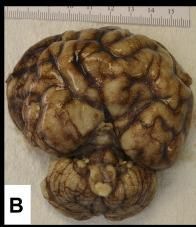
Image: PMC8660850, CC BY - Pons
- Occipital lobe
- Cerebellum
- Medulla oblongata
Answer key
- B Substantia Nigra
- C Fastigial
- C Dentate nucleus
- A Brain
- C Cerebellar Nuclei
- B Dentate nucleus
- A Olivocerebellar fibres
- D Pyramidal cells
- B Deep cerebellar nuclei
- B Purkinje cells
- D All
- C Purkinje cells
- B Purkinje cells
- C Olivo cerebellar
- D Fastigial
- A Ponto cerebellar pathway
- C Granular
- D Pontocerebellar
- B Dentate nucleus
- C Dorsal spinocerebellar
- C Pyramidal cells
- B Bipolar
- A Tectocerebellar
- C Dendritic tree
- B Dentate nucleus
- A Nucleus caudate
- B Purkinje cells
- C Cerebellum
About these questions
Previous year questions on Cerebellum for INI-CET (Institutes of National Importance Combined Entrance Test), from the Anatomy section of the exam.
Most questions here come from previous-year papers of Indian postgraduate medical entrance and licensing exams; where a paper and year are recorded the question carries them. The image-based questions are original vignettes written around an openly licensed figure, and were never asked in any exam.
Anatomy is worth about 11 of the 200 questions on the exam. See every subject’s weightage.