INI-CET · Dermatology
Acne, Rosacea and Related Sebaceous Gland Disorders PYQs
- 47 live questions in Acne, Rosacea and Related Sebaceous Gland Disorders.
- Question set last updated .
47 questions with answers
A 40 years old female presents with a 2 years history of erythematous papulopustular lesions on the convexities of face. There is background of erythema and telangiectasia. The most probable diagnosis would be?
- Acne vulgaris
- Rosacea
- SLE
- Polymorphic light eruptions
An elderly male presented with longstanding progressive increase in nose size with hardened. On clinical examination it was thought to be end stage of chronic acne rosacea. Your diagnosis is
- Rhinosporidiosis
- Rhinophyma
- Atrophic rhinitis
- Strawberry nose
Benzoyl peroxide acts in acne vulgaris by:
- Decreased sebum production
- Acts as oxidizing agent
- Reduces epithelial proliferation
- Decreasing bacterial count
18yr old female complains of recurrent acne all over her face and neck. Which of the following is the preferred drug to be applied topically?
- Minocycline
- Oxytetracycline
- Demeclocycline
- Doxycylcine
Which of the following should not be used in the ROSACEA?
- Isoetretin
- Metronidazole
- Steroids
- Benzoyl peroxide
A 24 year old unmarried woman has multiple nodular, cystic, pustular and comedonicus lesions on face, upper back and shoulders for 2 years. The drug of choice for her treatment:
- Erythromycin
- Isotretinoin
- Doxycycline
- Azithromycin
A 35-year-old woman presents with a history of erythematous papulopustular lesions on the face. She reports diffuse redness on her cheeks. The most likely diagnosis in the patient is
- Acne vulgaris
- Rosacea
- Atopic dermatitis
- Seborrheic dermatitis
Hidradenitis suppurativa is a disease of
- Eccrine sweat glands
- Apocrine sweat glands
- Kaposi sarcoma
- Hair follicles
Causative factor for acne are all except.
- Androgen
- Only food
- Bacterial contamination
- Hypercornification of duct
Comedons are characteristics of:
- Acne vulgaris
- Acne rosasea
- SLE
- d. Adenoma sebaceum
All of the following are varients of Acne, EXCEPT:
- Acne conglobata
- Acne agminata
- Acne fulminans
- Pomade acne
A 24-year-old unmarried women has multiple nodular, cystic, pustular and comadonic lesions on face, upper back and shoulders for 2 years. The drug of choice for her treatment would be:
- Acitretin
- Isotretinoin
- Doxycycline
- Azithromycin
In sebaceous glands, accumulation of sebum leads to:
- Milia
- Acne
- Epidermoid cyst
- Miliaria
Which of the following is the drug of choice in the treatment of nodulo cystic acne?
- Systemic steroids
- Isotretinoin
- Estrogen
- Benzoylperoxide
Treatment of acne vulgaris may include all except?
- Cryotherapy
- Oestrogens
- UV light
- Androgens
Difference in acne rosacea & acne vulgaris:
- Erythema
- Absence of comedone
- Papule
- Pustule
Recalcitrant Pustular Acne is treated by
- Oral Erythromycin
- Oral tetracycline
- Steriod
- Retinoid
Most common side effect of retinoids is
- Headache
- Dryness of skin and mucous membranes (cheilitis)
- Photosensitivity
- Diarrhoea
All of the following are true regarding Fordyce spots except ____:
- Ectopic sebaceous glands
- They are asymptomatic
- Associated with hair follicles
- Occur commonly on upper lip
Rhinopyma is
- Septal deviation of nose
- Sweat gland hypertrophy
- Mucous gland hypertrophy
- Sebaceous gland hypertrophy
Treatment options for acne vulgaris is/are ?
- Topical erythromycin
- Oral Minocycline
- Isotretinoin
- All the above
Hidradenitis suppurativa is an affection of: March 2011
- Nail
- Apocrine gland
- Eccrine sweat gland
- Sebaceous gland
Regarding Fordyce spots :
- Represent internal maliganancy
- Ectopic sebaceous glands
- Present in axillae
- All
Which hormone is responsible for acne -
- Estrogen
- Thyroid
- Testosterone
- Gonadotropins
A patient presented with multiple nodulocystic lesions on the face. The drug of choice is :
- Retinoids
- Antibiotics
- Steroids
- UV light
A 24-year-old girl presented with complains of acne. On examination, multiple nodules, cysts and intercommunicating sinuses were seen. How will you treat her?
- Acitretin
- Oral isotretinoin
- Doxycycline
- Tazorotene
Comedones are seen in :
- Pityriasis
- Lichen planus
- Adenoma sebaceum
- Acne vulgaris
What is the treatment for nodulocystic acne vulgaris?
- Isotretiroin
- Clindamycine cream
- Topical steroids
- Benzoyl peroxide
Fox fordyces spots represent ?
- Pilosebaceous glands
- Sebaceous glands
- Eccrine sweat glands
- Apocrine sweat glands
A 40 year old woman presents with a 2 year old h/o erythematous papulo pustular lesions on convexities of the face. There in a background of erytherma & telengiec-tasia. The most likely diagnosis is:
- Acne valgaris
- Rosacea
- SLE
- Polymorphic light eruption
Treatment of nodulocystic acne is
- Erythromycin
- Teacycline
- Isoretinonine (Retinoic acid)
- Steroids
Which of the glands are affected in Fox Fordyce disease?
- Sebaceous glands
- Eccrine glands
- Pilosebaceous units
- Apocrine glands
Acne Vulgaris is due to involvement of:
- Sebaceous Gland
- Pilosebaceous Gland
- Eccrine Gland
- Apocrine Gland
Differential diagnosis of rosacea includes all of the following except?
- Acne vulgaris
- Lupus erythematosus
- BCC
- Melasma
Latest retinoid drug used in acne is: March 2005
- Retinoic acid
- Clindamycin
- Adapalane
- Azelaic acid
Fordyce spots are seen on-
- Lips
- Tongue
- Fingers
- Nails
A 40-year-old woman presents with a 2-year history of erythematous papulopustular lesions on the convexities of the face. There is a background of erythema and telangiectasia. The most likely diagnosis in the patient is:
- Acne vulgaris
- Rosacea
- Systemic lupus erythematosus
- Polymorphic light eruption
19 years old girl has multiple papulo pustular erythematous lesions on face and neck, the likely diagnosis is
- Acne rosacae
- Acne Vulgaris
- Pityriasis Versicolour
- Lupus Vulgaris
Comedones are characteristics of -
- Acne vulgaris
- Acne rosasea
- SLE
- Adenoma sebaeceum
Bromhidrosis affect which gland -
- Eccrine sweat gland
- Apocrine sw'eat gland
- Both eccrine and apocrine sweat gland
- None of the above
Comedones are characteristic of: September 2004
- Psoriasis
- Acne vulgaris
- Lichen planus
- Pemphigus
A 17-year-old male was to be started with Oral Isotretinoin. What parameter should be measured before instituting therapy?
- Liver function test and serum electroytes
- LFT and lipid profile
- Serum electrolytes and lipid profile
- Platelet counts
Oral retinoid is indicated in the treatment of:
- Acne vulgaris
- Pemphigus vulgaris
- Lupus vulgaris
- Erythema multiforme
Miliaria arises from obstruction of ?
- Eccrine sweat glands
- Apocrine sweat glands
- Sebaceous glands
- Ectopic sebaceous glands
Acne vulgaris is caused by-
- Staph aureus
- Diphtheroids
- Sweat gland hyperplasia
- Obstruction to pilosebaceous duct
SAPHO syndrome components are all except?
- Acne
- Hyperostosis
- Osteitis
- Acantholysis
A 58-year-old woman has had itching, scaling and recurrent discharge from both external ear canals for many years. Over the last two years the pinna has slowly become bulky and disfigured, as shown. Which is the most likely diagnosis?
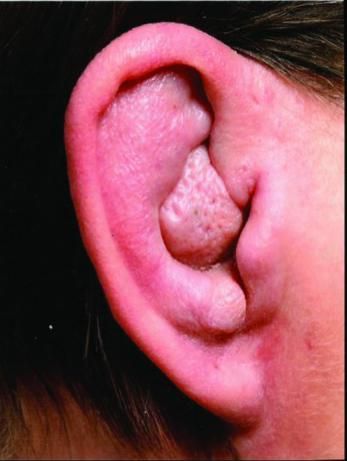
Image: PMC3624775, CC BY - Otophyma (phymatous sebaceous and connective tissue hypertrophy of the auricle)
- Keloid following ear piercing
- Nodular basal cell carcinoma of the concha
- Chondrodermatitis nodularis helicis
Show answer
A. Otophyma (phymatous sebaceous and connective tissue hypertrophy of the auricle)
Think this answer is wrong? Report it
Answer key
- B Rosacea
- B Rhinophyma
- D Decreasing bacterial count
- A Minocycline
- C Steroids
- B Isotretinoin
- B Rosacea
- D Hair follicles
- B Only food
- A Acne vulgaris
- B Acne agminata
- B Isotretinoin
- B Acne
- B Isotretinoin
- D Androgens
- B Absence of comedone
- D Retinoid
- B Dryness of skin and mucous membranes (cheilitis)
- C Associated with hair follicles
- D Sebaceous gland hypertrophy
- D All the above
- B Apocrine gland
- B Ectopic sebaceous glands
- C Testosterone
- A Retinoids
- B Oral isotretinoin
- D Acne vulgaris
- A Isotretiroin
- D Apocrine sweat glands
- B Rosacea
- C Isoretinonine (Retinoic acid)
- D Apocrine glands
- B Pilosebaceous Gland
- D Melasma
- C Adapalane
- A Lips
- B Rosacea
- B Acne Vulgaris
- A Acne vulgaris
- C Both eccrine and apocrine sweat gland
- B Acne vulgaris
- B LFT and lipid profile
- A Acne vulgaris
- A Eccrine sweat glands
- D Obstruction to pilosebaceous duct
- D Acantholysis
- A Otophyma (phymatous sebaceous and connective tissue hypertrophy of the auricle)
About these questions
Previous year questions on Acne, Rosacea and Related Sebaceous Gland Disorders for INI-CET (Institutes of National Importance Combined Entrance Test), from the Dermatology section of the exam.
Most questions here come from previous-year papers of Indian postgraduate medical entrance and licensing exams; where a paper and year are recorded the question carries them. The image-based questions are original vignettes written around an openly licensed figure, and were never asked in any exam.
Dermatology is worth about 6 of the 200 questions on the exam. See every subject’s weightage.
More in Dermatology
- Cutaneous Connective Tissue Disease
- Cutaneous Malignancies
- Cutaneous Manifestations of Systemic Disease
- Cutaneous Structure and Function
- Histopathology of Cutaneous Lesions
- Lesion Morphology and Diagnostic Workup
- Hair and Nail Disease
- Pigmentary Disorders of the Skin
- Dermatitis
- Urticaria and Angioedema
- Drug Eruptions and Reactive Cutaneous Disease
- Papulosquamous Skin Diseases