INI-CET · Pathology
Non-Hodgkin Lymphoma: Low Grade PYQs
- 18 live questions in Non-Hodgkin Lymphoma: Low Grade.
- 4 of 18 questions carry a recorded exam year: 2017, 2018, 2019.
- Question set last updated .
18 questions with answers
The t(14;18) translocation characteristic of follicular lymphoma results in overexpression of which of the following?
- Bcl 2
- Bcl 6
- Bcl 1
- None of the above
Origin of lymphoplasmacytic lymphoma is from:-
- Germinal centre T cell
- Germinal centre B cell
- Post germinal centre B cell
- Pre germinal centre B cell
In Alibert-Bazin syndrome, origin of lymphoma is from:-
- Eosinophil
- B lymphocyte
- Monocyte
- T lymphocyte
Tumor cells in chronic lymphocytic leukemia or small lymphocytic lymphoma (CLL/SLL) arise from which of the following?
- Mature B cell
- Naive B cell
- Centrocytes of germinal center
- Progenitor B-cell
'Hairy cell leukemia' is a neoplastic proliferation of-
- T.cells
- B.cells
- Myeloid cells
- Macrophages
Mantle cell lymphoma shows
- CD 5+, CD 25-
- CD 5+, CD 10+
- CD 5+, CD 23+
- CD 5+, CD 23-
All the following MALT lymphomas are related to the following organism except:
- MALT lymphomas of stomach-H.pylori
- MALT lymphomas of skin- Bartonella
- MALT lymphomas of eye - Chlamydophila psittaci
- MALT lymphomas of small intestine - Campylobacter jejuni
70 year old male presented with 3-months history of generalised weakness. On examination, bilateral axillary lymphadenopathy was noted. Histopathological examination of enlarged lymph node showed effacement of lymph node architecture by diffuse proliferation of small-sized, mature-appearing lymphoid cells. Peripheral blood showed lymphocytosis with presence of CD5-positive and CD23-positive B-cells. Which of the following is the most likely diagnosis of this patient?
- Burkitt leukemia
- Hodgkin lymphoma
- Chronic lymphocytic leukemia (CLL)
- Diffuse large B-cell lymphoma (DLBCL)
Cyclin D1 translocation is seen in ?
- Follicular lymphoma
- Mantle cell lymphoma
- Hodgkin lymphoma
- Melanoma
A 70 year old male presented with generalized lymphadenopathy. WBC count was 50,000/mm3 and blood film showed >70% mature looking lymphocytes. Which is the next ideal investigation for clinching the diagnosis?
- Lymph node biopsy
- Peripheral blood immunophenotyping
- Bone marrow aspiration
- Peripheral blood cytogenetics
A patient presents with cervical lymphadenopathy. Biopsy demonstrates a nodular lymphoma with follicle formation. This lesion would most likely be associated with which of the following?
- bcr-abl hybrid
- bcl-2 activation
- c-myc activation
- t(8, 14)
Triad of hairy cell leukemia includes all Except
- Splenomegaly
- Pancytopenia
- Erythema nodosum
- Hypercellular marrow
A 62-year-old man has had fever and a 4-kg weight loss over the past 6 months. On physical examination, his temperature is 38.6deg C. He has generalized nontender lymphadenopathy, and the spleen tip is palpable. Laboratory studies show hemoglobin, 10.1 g/dL; hematocrit, 30.3%; platelet count, 140,000/mm3; and WBC count, 24,500/mm3 with 10% segmented neutrophils, 1% bands, 86% lymphocytes, and 3% monocytes. A cervical lymph node biopsy specimen microscopically shows a nodular pattern of small lymphoid cells. A bone marrow biopsy specimen shows infiltrates of similar small cells having surface immunoglobulins that are CD5+, but CD10-. Cytogenetic analysis indicates t (11;14) in these cells. What is the most likely diagnosis?
- Acute lymphoblastic lymphoma
- Burkitt lymphoma
- Follicular lymphoma
- Mantle cell lymphoma
Sezary syndrome is included in category of-
- T cell leukaemia
- B cell lymphoma
- B cell leukaemia
- Pigmented disorder of skin
CD 19 positive, CD22 positive, CD103 positive monoclonal B-cells with bright kappa positivity were found to comprise 60% of the peripheral blood lymphoid cells on flow cytometric analysis in a 55 year old man with massive splenomegaly and a total leucocyte count 3.3 x 10⁹/L. Which one of the following is the most likely diagnosis -
- Splenic lymphoma with villous lymphocytes
- Mantle cell lymphoma
- B-cell prolymphocytic leukemia
- Hairy cell leukemia
The Low Grade Non-Hodgkins Lymphoma is:
- Follicular
- Large cell
- Diffuse large cell
- Lymphoblastic
Mycosis fungoides is?
- T cell lymphoma
- B cell lymphoma
- Mixed
- Plasma cell tumour
A 68-year-old man reports a painless, slowly enlarging fleshy lesion under the lower lid of the right eye over six months. There is no pain, discharge or visual loss. The clinical photograph is shown. What is the most likely diagnosis?
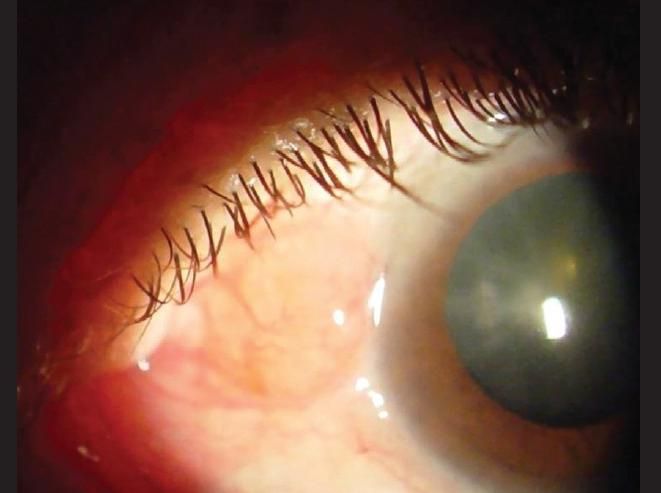
Image: PMC3018103, CC BY - Subconjunctival haemorrhage
- Extranodal marginal zone (MALT) lymphoma of the conjunctiva
- Pterygium
- Conjunctival squamous cell carcinoma
Show answer
B. Extranodal marginal zone (MALT) lymphoma of the conjunctiva
Think this answer is wrong? Report it
Answer key
- A Bcl 2
- C Post germinal centre B cell
- D T lymphocyte
- B Naive B cell
- B B.cells
- D CD 5+, CD 23-
- B MALT lymphomas of skin- Bartonella
- C Chronic lymphocytic leukemia (CLL)
- B Mantle cell lymphoma
- B Peripheral blood immunophenotyping
- B bcl-2 activation
- C Erythema nodosum
- D Mantle cell lymphoma
- A T cell leukaemia
- D Hairy cell leukemia
- A Follicular
- A T cell lymphoma
- B Extranodal marginal zone (MALT) lymphoma of the conjunctiva
About these questions
Previous year questions on Non-Hodgkin Lymphoma: Low Grade for INI-CET (Institutes of National Importance Combined Entrance Test), from the Pathology section of the exam.
Most questions here come from previous-year papers of Indian postgraduate medical entrance and licensing exams; where a paper and year are recorded the question carries them. The image-based questions are original vignettes written around an openly licensed figure, and were never asked in any exam.
Pathology is worth about 15 of the 200 questions on the exam. See every subject’s weightage.
More in Hematology
- Disorders of the Coagulation Cascade
- Blood Components and Transfusion Reactions
- Acute Lymphoblastic Leukemia (ALL)
- Acute Myeloid Leukemia (AML)
- Hodgkin Lymphoma
- Non-Hodgkin Lymphoma: Overview
- Non-Hodgkin Lymphoma: High Grade
- Multiple Myeloma and Other Plasma Cell Neoplasms
- Myelodysplastic and Myeloproliferative Neoplasms and Histiocytosis
- White Cell Disorders and Lymphadenitis
- Microcytic Anemias
- Normocytic and Macrocytic Anemias