NEET PG · Dermatology
Cutaneous Manifestations of Systemic Disease PYQs
- 30 live questions in Cutaneous Manifestations of Systemic Disease.
- 1 of 30 questions carries a recorded exam year: 2018.
- Question set last updated .
30 questions with answers
Xanthoma dissemination is associated with:-
- Down's Syndrome
- Diabetes Insipidus
- Lymphoma
- Ca Pancreas
Ainhum is seen in
- Base of great toe
- Base of fingers tips
- Base of toe
- Ankle
The most common malignancy that produces ichthyosis?
- Hodgkin's disease
- Mycosis fungoides
- Kaposi's sarcoma
- Carcinoma breast
Which of the following infections causes a non-centrally distributed rash?
- Epidemic typhus
- Measles
- Secondary syphilis
- Typhoid
Xanthoma disseminatum is associated with:
- Downs syndrome
- Diabetes insipidus
- Lymphoma
- Ca pancreas
Acanthosis nigricans is indicative of:
- Internal malignancy
- Endocrine disorder
- Blooms syndrome
- All
40 yrs old diabetic patient presents with round lesions for 2 weeks on abdomen. HPE shows palisading granuloma. What is the diagnosis?
- Granuloma annulare
- Pemphigus erythematosus
- Leprosy
- Tinea
Which of the following is a secondary cutaneous diseases?
- Ichthyosis
- Psoriasis
- Lichen planus
- Reiter's disease
All the following are primary cutaneous diseases except:
- Psoriasis
- Reiter's disease
- Lichen planus
- Icthiosis/Bowen's disease
Not a primary skin disease -
- Lichen planus
- Psoriasis
- Reiter's disease
- Vitiligo
A 45-year-old obese patient presents with symmetrical, velvety, hyperpigmented, thickened plaques over the back and sides of her neck. What is your diagnosis?
- Acanthosis nigricans
- Lichen Planus
- Atopic dermatitis
- Contact dermatitis
Acanthosis nigricans is associated with malignancies and: March 2013
- Hypertension
- MI
- Insulin resistance
- Leprosy
Cutaneous sign of diabetes mellitus are all except
- Necrobiosis lipoidica
- Carotinosis
- Shin spots (granuloma annulare)
- Angiokeratomas
Which of the following is true for acanthosis nigricans:
- May be an indication of skin malignancy
- Hypopigmentation
- May be associated with Insulin resistant diabetes mellitus
- Commonly occurs in lean and thin
Show answer
C. May be associated with Insulin resistant diabetes mellitus
Think this answer is wrong? Report itExanthemas are caused by all EXCEPT:
- Malaria
- Typhoid
- Measles
- Rubella
Necrolytic migratory erythema is a skin manifestation of
- Lyme disease
- Acrodermatitis enteropathica
- Sweets syndrome
- Glucagonoma syndrome
Icthyosis is associated with:
- Hodgkins disease
- AIDS
- Hypothyroidism
- All
Acanthosis Nigricans in old patient usually indicate :
- Skin Disorder
- Malignancy
- Senile Brain
- Usually found in negro
Pyoderma gangrenosum is most commonly associated with:
- Crohn's disease
- Diverticulosis
- Ulcerative colitis
- Carcinoma colon
Underlying internal malignancy is not shown by
- Acanthosis nigricans & Annular erythema
- Bullous pyoderma & migratory necrotizing erythema
- Granuloma annulare
- Erythema gyratum repens
Commonest site of Necrobiosis Lipidoica Diabeticorum is:
- Face
- Neck
- Leg
- Ann
Scleredema is associated with?
- Progressive systemic sclerosis
- Leprosy
- Diabetes
- Hypothyroid
Which of the following is not a feature of Elastosis perforans serpiginosa?
- Hyperplastic epidermis with basophilic nuclear debris
- More common in males
- More common in Lower part of body
- AD mode with variable expression
A 55-year-old woman complains to her physician that the skin of her armpits and groin "keeps getting darker and darker." Physical examination demonstrates velvety brown and way skin in the axilla and groin. Biopsy of these lesions shows a variably hyperplastic epidermis with many sharp peaks and valleys. Aside from cosmetic considerations, which of the following is the primary medical significance of these lesions?
- They may be a sign of immunosuppression
- They may be a sign of visceral carcinoma
- They may be easily superinfected
- They may be malignant
Most common association with Acanthosis nigricans ?
- Hypertension
- DM
- Obesity
- Hypothyroidism
Ichthyosis may be associated with: September 2003
- Carcinoma lung
- Carcinoma breast
- Leukemia
- Lymphoma
False regarding acanthosis nigricans is
- Prognostic indicator
- Velvety plaques on dirty hyperpigmentation
- Confirmatory sign of malignancy
- Gastric adenocarcinma is commonest malignant association
Acanthosis nigricans is associated with?
- Insulin resistance
- Gastric carcinoma
- Hyperpigmentation
- All of the above
Which is the most common site of Necrobiosis lipoidica diabeticorum?
- Face
- Neck
- Front of leg
- Back of leg
A 34-year-old woman has had crops of asymptomatic small skin lesions over the elbows and lateral thighs for six months. Each begins as a pink papule and evolves into the appearance shown, with a depressed porcelain-white atrophic centre surrounded by a thin erythematous rim. Over the last month she has developed recurrent colicky abdominal pain. Which is the most likely diagnosis?
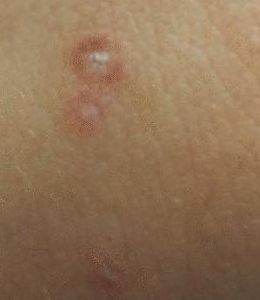
Image: PMC8101154, CC BY - Papulonecrotic tuberculid
- Guttate morphea
- Extragenital lichen sclerosus
- Atrophic papulosis (Degos disease)
Answer key
- B Diabetes Insipidus
- C Base of toe
- A Hodgkin's disease
- C Secondary syphilis
- B Diabetes insipidus
- D All
- A Granuloma annulare
- D Reiter's disease
- B Reiter's disease
- C Reiter's disease
- A Acanthosis nigricans
- C Insulin resistance
- D Angiokeratomas
- C May be associated with Insulin resistant diabetes mellitus
- A Malaria
- D Glucagonoma syndrome
- D All
- B Malignancy
- C Ulcerative colitis
- C Granuloma annulare
- C Leg
- C Diabetes
- C More common in Lower part of body
- B They may be a sign of visceral carcinoma
- C Obesity
- D Lymphoma
- C Confirmatory sign of malignancy
- D All of the above
- C Front of leg
- D Atrophic papulosis (Degos disease)
About these questions
Previous year questions on Cutaneous Manifestations of Systemic Disease for NEET PG (National Eligibility cum Entrance Test - Postgraduate), from the Dermatology section of the exam.
Most questions here come from previous-year papers of Indian postgraduate medical entrance and licensing exams; where a paper and year are recorded the question carries them. The image-based questions are original vignettes written around an openly licensed figure, and were never asked in any exam.
Dermatology is worth about 4 of the 200 questions on the exam. See every subject’s weightage.
More in Dermatology
- Arthropod Bites and Parasitic Infestations
- Syphilis
- Sexually Transmitted Infections Other Than Syphilis
- Inherited Skin Disorders and Nutritional Dermatoses
- Cutaneous Connective Tissue Disease
- Cutaneous Malignancies
- Cutaneous Structure and Function
- Histopathology of Cutaneous Lesions
- Lesion Morphology and Diagnostic Workup
- Acne, Rosacea and Related Sebaceous Gland Disorders
- Hair and Nail Disease
- Pigmentary Disorders of the Skin