NEET PG · Medicine
HIV and AIDS: Epidemiology and Clinical Features PYQs
- 35 live questions in HIV and AIDS: Epidemiology and Clinical Features.
- 3 of 35 questions carry a recorded exam year: 2018, 2019.
- Question set last updated .
35 questions with answers
Which of the following is not an AIDS defining illness?
- Hodgkin's lymphoma
- Cervical cancer
- Primary CNS lymphoma
- Kaposi sarcoma
Not an AIDS defining illness?
- Tertiary Syphilis
- Lymphoma of brain < 60 years of age
- Progressive multifocal leukoencephalopathy
- Extrapulmonary Cryptococcosis
Mean transformation time for HIV to AIDS is:
- 7.5 years
- 10 years
- 15 years
- 12 years
Neuropsychiatric complications of HIV include all except
- Dementia
- Depression
- Mania
- OCD
CDC Stage 3 (AIDS) - Defining Opportunistic Illnesses in HIV Infection doesn't include
- Oral candidiasis
- Pneumocystis carini pneumonia
- Wasting syndrome
- Kaposi's sarcoma
Which of the following is the pathogen responsible for blindness in advanced HIV infections?
- Cytomegalovirus
- Epstein-Barr virus
- Fungus
- Toxoplasma
Which is not included in AIDS related complex?
- Ectopic pregnancy
- Recurrent genital candidiasis
- Generalised lymphadenopathy
- Chronic diarrhea
If untreated, percentage of mother to child transmission of HIV during delivery without intervention in a non-breast fed child is:
- 40-50%
- 10-15%
- 15-30%
- 5%
Which of the following is associated with HIV infection
- Hairy leukoplakia
- Erythroplakia
- Oral Lichen planus
- Bullous pemphigoid
Oral hairy leukoplakia is seen in AIDS patients. The most likely site of appearance is:
- Lateral borders of tongue
- Sublingual mucosa
- Soft palate
- Buccal mucosa
A 16-year-old patient was recently diagnosed with HIV. Which of the following could be associated?
- Distal onychomycosis
- Proximal subungual onychomycosis
- White superficial onychomycosis
- Paronychia with Candida onychomycosis
True about HIV
- Not transmitted through semen
- More chances of transmission during LSCS than normal labour
- More infectious than hepatitis B
- Male to female transmission > female to male
Class II of HIV associated diseases describes:
- Acute infections
- Asymptomatic infections
- Persistent generalized lymphadenopathy
- All of the above
Homosexual men with AIDS are most likely to exhibit-
- Antibodies to HTLV-II
- Pneumocystis carinii pneumonia
- Elevation of inducer/helper T cells
- All of the above
All of the following are cardiovascular complications of HIV infection, EXCEPT:
- Aortic Aneurysm
- Cardiomyopathy
- Pericardial Effusion
- Cardiac Tamponade
Oral lesions in Immunocompromised state
- Lichen planus
- Lichenoid eruption
- Oral hairy leukoplakia
- Erythroplakia
Most common pulmonary manifestation in AIDS
- TB
- Pneumonia
- Bronchiectasis
- Mycobacterial avium intracellular
A person having CD4 count of 200 presents with difficulty of breathing. The most probable diagnosis is?
- Tuberculosis
- Histoplasmosis
- Candidiasis
- Pneumocystis jiroveci
Which of the following is not seen in HIV Patient with CD4 count less than 100 Per micro litre, who has non productive cough -
- Mycobacterium tuberculosis
- Pneumocystis carinii
- Mycoplasma pneumoniae
- Cryptococcal infection
The most common oral manifestation of HIV infection/AIDS is -
- Follicular tonsillitis
- Lichen planus
- Oral candidiasis
- Hairy leukoplakia
Oropharynx manifestation of HIV infection is -
- Oral hairy leukoplakia
- Caries tooth
- Cheilitis
- Pharyngitis
The most common site of lymphoma in AIDS is:
- CNS
- Orbit
- GIT
- Lungs
Recognized GIT infections in AIDS include all except
- HSV
- CMV
- Cryptococcus neoformans
- Atypical mycobacteria
HIV-E is more common
- India
- Africa
- Europe
- Thailand
Secondary infections in HIV infected patient are classified under:
- Class I
- Class II
- Class III
- Class IV
In AIDS there is a deficiency of which cell?
- CD2
- CD3
- CD4
- CD8
Most common malignancy in AIDS is:
- Kaposi sarcoma
- Hodgkins lymphoma
- Leukemia
- Multiple myeloma
HIV which is found in West Africans is?
- HIV 1
- HIV 2
- HIV 3
- HIV 4
AIDS was first diagnosed in patients suffering from
- Cryptococcus neoformans meningitis
- Pneumocystis carinii
- Kaposi sarcoma
- Tuberculosis
Pathognomonic lesion in HIV is:
- Gingivitis
- Oral hairy leukoplakia
- Herpes simplex
- Aphthous ulcers
Least common cause of seizures in AIDS patient is?
- Toxoplasmosis
- Cerebral lymphoma
- Progressive multifocal leukoencephalopathy
- Cryptococcal meningitis
The most common ophthalmic lesion in AIDS is -
- Hard exudates
- Cotton wool spots
- Angioid streaks
- Microaneurysms
Least common mode of transmission of HIV?
- Homosexual contact
- Heterosexual
- IV drug abuse
- Transfusion of blood products
A 34-year-old man with HIV infection who stopped antiretroviral therapy a year ago and has a CD4 count of 28 cells/microlitre reports progressive painless blurring of vision in one eye. Fundus examination shows the appearance illustrated: a large confluent area of dense white retinal opacification involving the posterior pole with associated intraretinal haemorrhage. Which is the most likely diagnosis?
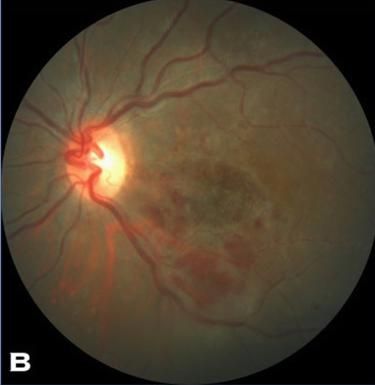
Image: PMC7847926, CC BY - Central retinal vein occlusion
- Acute retinal necrosis due to varicella zoster virus
- Cytomegalovirus retinitis
- Hypertensive retinopathy
A 34-year-old man with HIV infection (CD4 count 90/uL), not on antiretroviral therapy, presents with epigastric discomfort and iron deficiency anaemia. Examination shows several non-tender violaceous plaques on the hard palate and both shins. Upper gastrointestinal endoscopy of the gastric body is shown. Which is the most likely diagnosis?
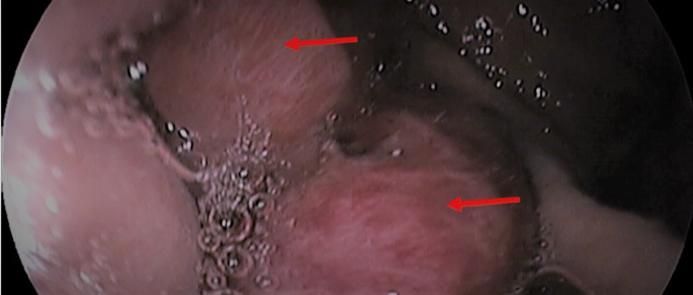
Image: PMC6417181, CC BY - Disseminated histoplasmosis
- Gastric MALT lymphoma
- Cytomegalovirus gastritis
- Kaposi sarcoma
Answer key
- A Hodgkin's lymphoma
- A Tertiary Syphilis
- B 10 years
- D OCD
- A Oral candidiasis
- A Cytomegalovirus
- A Ectopic pregnancy
- C 15-30%
- A Hairy leukoplakia
- A Lateral borders of tongue
- B Proximal subungual onychomycosis
- D Male to female transmission > female to male
- B Asymptomatic infections
- B Pneumocystis carinii pneumonia
- A Aortic Aneurysm
- C Oral hairy leukoplakia
- B Pneumonia
- D Pneumocystis jiroveci
- C Mycoplasma pneumoniae
- C Oral candidiasis
- A Oral hairy leukoplakia
- A CNS
- C Cryptococcus neoformans
- D Thailand
- D Class IV
- C CD4
- A Kaposi sarcoma
- B HIV 2
- B Pneumocystis carinii
- B Oral hairy leukoplakia
- C Progressive multifocal leukoencephalopathy
- B Cotton wool spots
- D Transfusion of blood products
- C Cytomegalovirus retinitis
- D Kaposi sarcoma
About these questions
Previous year questions on HIV and AIDS: Epidemiology and Clinical Features for NEET PG (National Eligibility cum Entrance Test - Postgraduate), from the Medicine section of the exam.
Most questions here come from previous-year papers of Indian postgraduate medical entrance and licensing exams; where a paper and year are recorded the question carries them. The image-based questions are original vignettes written around an openly licensed figure, and were never asked in any exam.
Medicine is worth about 22 of the 200 questions on the exam. See every subject’s weightage.
More in Medicine
- Plasma Cell Dyscrasias
- Chronic Myeloid and Chronic Lymphoid Leukaemia
- Hodgkin and Non-Hodgkin Lymphoma
- Disorders of Coagulation
- Haemoglobinopathies
- Transfusion Medicine and Blood Banking
- HIV and AIDS: Treatment and Prophylaxis
- Pulmonary and Extrapulmonary Tuberculosis
- Malaria, Dengue and Other Tropical Fevers
- COVID-19: Diagnostic Investigations
- COVID-19: Management
- Bedside Clinical Examination