INI-CET · Pathology
Necrosis and Apoptosis PYQs
- 57 live questions in Necrosis and Apoptosis.
- 6 of 57 questions carry a recorded exam year: 2017, 2018, 2019, 2020.
- Question set last updated .
57 questions with answers
APAF-1 is involved in the activation of which of the following caspases?
- Caspase 8
- Caspase 9
- Caspase 3
- Caspase 10
Which of the following type of necrosis is seen in blood vessel due to immune complex mediated damage?
- Coagulative necrosis
- Liquefactive necrosis
- Fibrinoid necrosis
- Caseous necrosis
Which type of necrosis is seen in brain?
- Coagulative
- Liquefactive
- Fat
- Fibrinoid
Which is false about apoptosis?
- No inflammation
- Plasma membrane intact
- Organelle swelling
- Affected by dedicated genes
Which of the following statements is false about apoptosis?
- No inflammation
- Intact plasma membrane
- Swelling of organelles
- Affected by dedicated genes
Apoptotic gene which is also associated with autophagy is
- p53
- BAX
- BCL-2
- BID
Liquefactive necrosis is seen in:
- Heart
- Brain
- Lungs
- Spleen
In apoptosis, Apaf-1 is activated by release of which of the following substance from the mitochondria?
- Bcl-2
- Bax
- Bcl-XL
- Cytochrome C
CD 95 has a major role in
- Apoptosis
- Cell necrosis
- Interferon activation
- Proteolysis
Which is activated for nuclear fragmentation in apoptosis?
- Caspases
- Apaf-1
- Oxygen free radicals
Coagulative necrosis is seen in -
- Tuberculosis
- Fungal infection
- Sarcoidosis
- Wet gangrene
DNA NICK AND LABELLING (insitu) technique is used to see?
- amount of total DNA in a mitochondria
- fraction of nucleic acids
- fraction of cells in apoptotic pathway quantified
- fraction of cells in meotic division is quantified
Show answer
C. fraction of cells in apoptotic pathway quantified
Think this answer is wrong? Report itThe following are examples of apoptosis, except
- Menstrual cycle
- Tumour necrosis
- Graft versus host disease
- Pathological atrophy following duct obstruction
Ladder pattern of DNA electrophoresis in apoptosis is caused by the action of following enzyme
- Endonuclease
- Transglutaminase
- DNAse
- Caspase
All the following are signs of necrosis Except
- Lipofuscin
- Cell Membrane Rupture
- Karyolysis
- Karyorrhexis
Example of Apoptosis is?
- Councilman Bodies
- Gamma Gandy Body
- Russell bodies
MI is a type of -
- Coagulative necrosis
- Liquefactive necrosis
- Caseous necrosis
- Fat necrosis
In apoptosis, Apaf-1 is activated by release of which of the following substance from the mitochondria?
- Bcl - 2
- Bax
- Bcl - Xl
- Cytochrome C
fibrinoid necrosis is seen in all the following except ?
- malignant hypertension
- acute rheumatic fever
- polyarthropathy
- polyarteritis nodosa
Which of the following necrosis occurs characteristically in brain infarcts?
- Caseous necrosis
- Fibrinoid necrosis
- Coagulative necrosis
- Liquefactive necrosis
Caspase are involved in
- Nerve processing
- Cell signaling
- Inflammation
- Apoptosis
Which cation is found in extremely high concentrations in cells that have undergone coagulative necrosis?
- Potassium
- Calcium
- Iron
- Cobalt
Which of the following processes of cell death does NOT elicit acute inflammation?
- Apoptosis
- Pyroptosis
- Necroptosis
- Necrosis
Apoptosis is suggestive of:
- Liquefaction degeneration
- Coagulative necrosis
- Neo angiogenesis
- Epithelial dysplasia
Disappearance of nuclear chromatin is called as
- Pyknosis
- Karyolysis
- Karyorhexis
Which of the following organelle plays a pivotal role in apoptotic pathways?
- Endoplasmic reticulum
- Golgi complex
- Mitochondria
- Nucleus
Programmed cell death is known as:
- Cytolysis
- Apoptosis
- Necrosis
- Proptosis
Following are the examples of apoptosis except:
- Graft versus host disease
- Menstrual cycle
- Pathological atrophy following duct obstruction
- Tumour necrosis
Ladder pattern of DNA electrophoresis is seen in
- Necrosis
- Apoptosis
- Cytolysis
- Karyorrhexis
All of the following are stress sensors/regulators for apoptosis, except ?
- Puma
- BAX
- Noxa
- BiM
The earliest change seen in apoptosis is -
- Cell shrinkage
- Pyknosis
- Formation of apoptotic bodies
- Fragmentation of cells
Necrosis of cell is due to -
- Ca+2 efflux in cell
- Fat deposition in cells
- Water imbibition in cells
- Enzymatic digestion
The fading of cellular chromatin is:
- Karyolysis
- Karyorrhexis
- Pyknosis
- Cytolysis
Fibrinoid necrosis is seen in following except
- Serum sickness
- Diabetes mellitus
- Arthus reaction
- SLE
Type of necrosis occurring in brain-
- Coagulative
- Liquefactive
- Fibrinoid
- Caseous
Not true about apoptosis is?
- Cellular swelling
- Nuclear compaction
- Intact cell membrane
- Cytoplasmic eosinophilia
Necrosis with putrefaction is called as:
- Desiccation
- Gangrene
- Liquefaction
- Coagulative necrosis
Coagulative necrosis is due to -
- Denaturation of protein
- Enzymatic digestion
- Infection
Which of the following is not associated with pathological apoptosis?
- DNA damage
- ER stress
- Transplant rejection
- Involution of hormone dependent tissue upon hormone withdrawal
Show answer
D. Involution of hormone dependent tissue upon hormone withdrawal
Think this answer is wrong? Report itCaspases contain which of the following amino acids in their active site?
- Cysteine
- Cystine
- Methionine
- Taurine
In-situ DNA nick end labeling can quantitate ?
- Fraction of cells in apoptotic pathways
- Fraction of cells in S phase
- p53 gene product
- bcr/abl gene
All of the following are associated with the development of fibrinoid necrosis, EXCEPT:
- Aschoff's nodule
- Malignant hypertension
- Polyarteritis nodosa
- Diabetic glomerulosclerosis
Characteristic feature of apoptosis -
- Cell membrane intact
- Cytoplasmic eosinophilia
- Nuclear moulding
- Cell swelling
In which type of necrosis tissue architecture is preserved:
- Liquefaction necrosis.
- Coagulative necrosis.
- Fat necrosis.
- All of the above.
Apoptosis does not occur by normal caspase pathway in?
- Liver
- Muscle
- Neurons
- Skin
Pyogenic infection and brain infarction associated with -
- Coagulative necrosis
- Liquefaction necrosis
- Caseous necrosis
- Fat necrosis
Caspases are involved in -
- Apoptosis
- Pinocytosis
- Cell signaling
- Cell injury
All of the following are features of apoptosis, except
- Inflammation is present
- Chromosomal breakage
- Clumping of chromatin
- Cell shrinkage
A 40 year old male patient complains of severe acute abdominal pain. Radiologic examination reveals multiple gall stones. On histologic examination, foci of necrosis containing shadowy outlines of necrotic cells surrounded by basophilic calcium deposits were seen. Which type of necrosis is seen in this patient?
- Coagulative
- Liquefactive
- Fat
- Fibrinoid
In apoptosis, cytochrome C acts through:
- Apaf 1
- Bcl-2
- FADD
- TNF
Which of the following has a direct role in apoptosis?
- Nitric oxide
- Adenylcyclase
- cAMP
- Cytochrome C
One of the following is apoptosis inhibitor gene
- p53
- BCL -2
- Rb
- C -myc
True about apoptosis is all except?
- Considerable apoptosis may occur in a tissue before it becomes apparent in histology
- Apoptotic cells appear as round mass of the intensely eosinophilic cytoplasm with dense nuclear chromatin fragments
- Apoptosis of cells induce inflammatory reaction
- Condensation of chromatin
Anti-apoptotic factor is?
- Bax
- Bim
- Bad
- Bcl-2
A 27-year-old woman has matted cervical lymphadenopathy, evening rise of temperature and weight loss. A hematoxylin and eosin-stained section of the excised node is shown. The amorphous eosinophilic material occupying the centre of the lesion represents which type of necrosis?
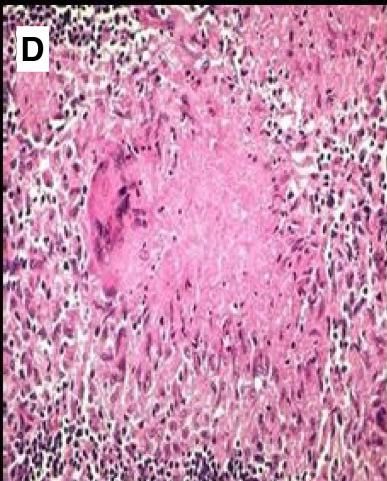
Image: PMC4426572, CC BY - Fibrinoid necrosis
- Caseous necrosis
- Liquefactive necrosis
- Coagulative necrosis
A 70-year-old man with known metastatic carcinoma undergoes a liver core biopsy. The haematoxylin and eosin section is shown: solid sheets of markedly pleomorphic cells with enlarged nuclei and prominent nucleoli surround a central zone of eosinophilic granular acellular debris. The central change within the tumour nest is best termed which of the following?
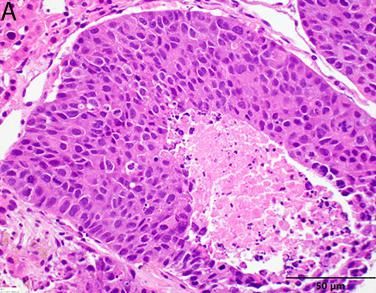
Image: PMC8495426, CC BY - Comedo-type (central) necrosis
- Fibrinoid necrosis
- Fat necrosis
- Caseous necrosis
A resected soft tissue tumour is examined histologically. The haematoxylin and eosin section shown contains a well-demarcated focus in which the cells have lost their nuclei and are replaced by intensely eosinophilic material with fibrin and extravasated red cells, while the overall tissue outline is preserved. Which type of necrosis does this focus represent?
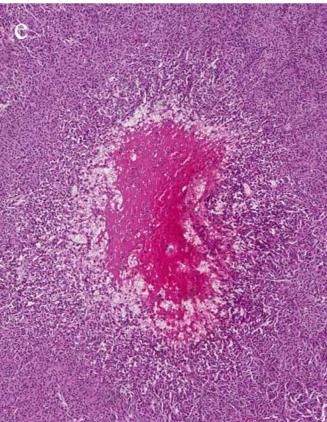
Image: PMC8750257, CC BY - Coagulative necrosis
- Liquefactive necrosis
- Caseous necrosis
- Fat necrosis
Answer key
- B Caspase 9
- C Fibrinoid necrosis
- B Liquefactive
- C Organelle swelling
- C Swelling of organelles
- C BCL-2
- B Brain
- D Cytochrome C
- A Apoptosis
- A Caspases
- A Tuberculosis
- C fraction of cells in apoptotic pathway quantified
- B Tumour necrosis
- A Endonuclease
- A Lipofuscin
- A Councilman Bodies
- A Coagulative necrosis
- D Cytochrome C
- C polyarthropathy
- D Liquefactive necrosis
- D Apoptosis
- B Calcium
- A Apoptosis
- A Liquefaction degeneration
- B Karyolysis
- C Mitochondria
- B Apoptosis
- D Tumour necrosis
- B Apoptosis
- B BAX
- A Cell shrinkage
- D Enzymatic digestion
- A Karyolysis
- B Diabetes mellitus
- B Liquefactive
- A Cellular swelling
- B Gangrene
- A Denaturation of protein
- D Involution of hormone dependent tissue upon hormone withdrawal
- A Cysteine
- A Fraction of cells in apoptotic pathways
- D Diabetic glomerulosclerosis
- A Cell membrane intact
- B Coagulative necrosis
- C Neurons
- B Liquefaction necrosis
- A Apoptosis
- A Inflammation is present
- C Fat
- A Apaf 1
- D Cytochrome C
- B BCL -2
- C Apoptosis of cells induce inflammatory reaction
- D Bcl-2
- B Caseous necrosis
- A Comedo-type (central) necrosis
- A Coagulative necrosis
About these questions
Previous year questions on Necrosis and Apoptosis for INI-CET (Institutes of National Importance Combined Entrance Test), from the Pathology section of the exam.
Most questions here come from previous-year papers of Indian postgraduate medical entrance and licensing exams; where a paper and year are recorded the question carries them. The image-based questions are original vignettes written around an openly licensed figure, and were never asked in any exam.
Pathology is worth about 15 of the 200 questions on the exam. See every subject’s weightage.
More in General Pathology
- Cells and Organs of the Immune System
- Hypersensitivity Reactions and Autoimmune Disease
- Immunodeficiency Disorders
- Amyloidosis and Transplant Rejection
- Histopathology Techniques and Special Stains
- Cell Genetics, Adaptation and Cell Injury
- Intracellular Accumulations, Pathological Calcification and Cell Ageing
- The Acute Inflammatory Response
- Chemical Mediators and Granulomatous Inflammation
- Wound Healing and Tissue Repair
- Hemodynamic and Hemostatic Disorders
- Patterns of Inheritance